|
|
|
|
|
|
|
|
|
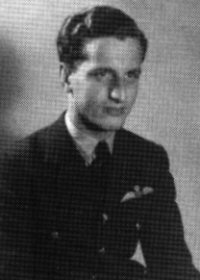
Flying Officer Kurt Taussig
Czech Kurt was sent, age 15, by his parents on the Kindertrnsport to England from Czechoslovakia in June 1939 to escape the Nazi persecution of the Jews. Determined to fight the Germans he joined the RAF at eighteen in late 1942, and after training was posted to the Middle East to join 225 Squadron flying Spitfires on photo-reconnaissance duties in Tunisia, the Sicily landings, and in Italy. He died on 19th September 2019.
|
|
| Text for the above items : |
The Hard Way Home by Robert Taylor. The Battle of Britain had been won by the young fighter pilots of Fighter Command, but now it fell to another band of young men to wage total warfare against the Nazi war machine - the aircrew of RAF Bomber Command. And like the fighter pilots of the Battle of Britain, the young men who flew with Bomber Command came not just from Britain, but from all over the Commonwealth, and from the countries of occupied mainland Europe. Every man was a volunteer, prepared to endure the deadly flak and prowling night fighters, to say nothing of the savage and bitter cold, in order to wage their relentless attack on the military and industrial targets of the Third Reich. The aircraft that carried these young men to war were numerous, but bearing the brunt of the RAFs incessant campaign were two heavy bombers, the stalwarts of Bomber Command - the Lancaster and the Halifax. Between them they accounted for over three quarters of all the bombs dropped by the RAF, and Halifaxes alone accounted for a total of 73,312 operations, nearly a fifth of all missions carried out by Bomber Command. |
Undaunted by Odds by Robert Taylor. On 6th November 1935, a prototype aircraft took to the air for the very first time. As Sydney Camm's sturdy, single-engine monoplane fighter climbed into the sky, few realized that it was destined to become one of the enduring symbols of the greatest air battle ever fought. Its name was the Hawker Hurricane. Undaunted by Odds is a moving tribute to the Hurricane and the gallant pilots who flew it in combat. The painting portrays the Hurricanes of the 303 Polish Squadron RAF during the Battle of Britain as the unit climbs steadily to intercept yet another incoming wave of enemy bombers heading for London in September 1940. Soon the already battle-hardened Polish pilots will once again be in the thick of the action. |
| Flying Officer Kurt Taussig Aircraft details |
 Spitfire Manufacturer : Supermarine Built : 20351 | Spitfire Royal Air Force fighter aircraft, maximum speed for mark I Supermarine Spitfire, 362mph up to The Seafire 47 with a top speed of 452mph. maximum ceiling for Mk I 34,000feet up to 44,500 for the mark XIV. Maximum range for MK I 575 miles . up to 1475 miles for the Seafire 47. Armament for the various Marks of Spitfire. for MK I, and II . eight fixed .303 browning Machine guns, for MKs V-IX and XVI two 20mm Hispano cannons and four .303 browning machine guns. and on later Marks, six to eight Rockets under the wings or a maximum bomb load of 1,000 lbs. Designed by R J Mitchell, The proto type Spitfire first flew on the 5th March 1936. and entered service with the Royal Air Force in August 1938, with 19 squadron based and RAF Duxford. by the outbreak of World war two, there were twelve squadrons with a total of 187 spitfires, with another 83 in store. Between 1939 and 1945, a large variety of modifications and developments produced a variety of MK,s from I to XVI. The mark II came into service in late 1940, and in March 1941, the Mk,V came into service. To counter the Improvements in fighters of the Luftwaffe especially the FW190, the MK,XII was introduced with its Griffin engine. The Fleet Air Arm used the Mk,I and II and were named Seafires. By the end of production in 1948 a total of 20,351 spitfires had been made and 2408 Seafires. The most produced variant was the Spitfire Mark V, with a total of 6479 spitfires produced. The Royal Air Force kept Spitfires in front line use until April 1954. |
| Flying Officer Kurt Taussig Squadron details |
|
Contact Details |
|
Sign Up To Our Newsletter!
This website is owned by Cranston Fine Arts. Torwood House, Torwoodhill Road, Rhu, Helensburgh, Scotland, G848LE Contact: Tel: (+44) (0) 1436 820269. Email: cranstonorders -at- outlook.com
|
 |





