|
|
|
|
|
|
|
|
|
Robert Taylor Prints  Luftwaffe Luftwaffe  Me109 Me109 |
[UP] |
| Navigation | |
| Page 2 of 3 | Previous .. Page 2 .. Next |
|
|
|
|
|
|
|
|
|
|
|
|
|
|
|
|
|
|
|
|
|
| Navigation | |
| Page 2 of 3 | Previous .. Page 2 .. Next |
| Text for the above items : |
Eagles on the Channel Front by Robert Taylor. An exceptional painting by the worlds foremost aviation artist remembering the most famous of all Luftwaffe Fighter Wings that fought on the Western Front during the early years of World War Two. Prints are signed by Luftwaffe Aces who contested the great air battles with pilots of the RAF on the infamous Channel Front, 1940-1941 Badly mauled during the Battle of Britain, by early 1941 the Luftwaffe fighter wings, strung right across northern France, were back on strength. The front line squadrons were reequipping with the up-rated Me109F and, though suffering initial over-heating problems, the remarkable new Fw190A was making its first appearances. The Luftwaffe pilots were again full of confidence, and having the air endurance advantage of fighting close to their bases, they were competing on equal terms with the Spitfires and Hurricanes of RAF Fighter Command. Having spent the first 18 months of the war fighting a defensive air battle, RAF Fighter Command was raring to go onto the attack. The mix of Rhubarbs - two or three-plane, low-level incursions to attack enemy bases and installations - and large fighter sweeps aimed to entice the Luftwaffe up for a fight, kept the German fighter pilots busy throughout the summer. All through 1941 great air battles raged all along the Channel Front. Robert Taylors comprehensive work Eagles on the Channel Front, the fourth and final print in his widely acclaimed Wings of the Luftwaffe series, recreates a scene in northern France in the late autumn of 1941. Having just returned to their temporary airstrip in the region of St. Omer, Luftwaffe pilots of JG-26 excitedly debrief their recent encounter with Spitfires and Hurricanes, fought high over the Channel coast. The gleaming new Me109Fs are discreetly parked under trees on the edge the airfield, providing some cover from low-level surprise attacks. While ground crews busily prepare the Wings Me109s for another mission, a group of the exciting new Fw190A fighters taxi out. The scenario will continue right into winter. In his inimitable style, and with inordinate skill, Robert Taylor manages to evoke the heady atmosphere of a German front line airfield on the Channel Front in 1941. |
Angels Three Zero by Robert Taylor Bobby Oxspring in his 66 Squadron Spitfire destroys an ME109 of JF/53 Ace of Spades Group, in a high level attack at 30,000 feet above Dover, 18th September 1940. |
Head on Attack by Robert Taylor On October 12, 1940, No. 603 Squadron, reduced to only eight aircraft, took on a large formation of Me109s attacking head on. Robert Taylors vivid portrayal shows Scott-Maldens Spitfire moments after knocking down an Me109 in the encounter, both he and his wingman coming through unscathed. |
Open Assault by Robert Taylor. The Junkers Ju87 Sturzkampfbomber, known to the British simply as the Stuka, had already acquired a deadly reputation across Europe, its siren screaming as the ungainly dive-bomber struck terror into the hearts of those below. In 1940 its pilots crossed the Channel with their grim-looking aircraft to terrorise the southern towns and ports of England. Robert Taylors painting Open Assault, depicts Hurricanes of 501 Squadron attacking a force of Ju87 Stukas as they dive-bomb naval vessels and installations in the port of Dover on 29 July 1940. High explosive bombs detonate within the sheltered anchorage as escorting Bf109s from JG51 race in to protect their lumbering charges. Four Stukas and two Me109s are despatched, for the loss of just one RAF aircraft. |
Aces on the Western Front by Robert Taylor. Returning from a combat mission over the English Channel, Me109s flying low over Mont St. Michel, northern coast of France, Spring 1941. |
Combat Over London by Robert Taylor During the legendary Battle of Britain Spitfires of 92 Squadron are engaged with Messerschmitt Me109s of JG-2 in a high-altitude dog-fight directly over London in September 1940. Way below bombers of the Luftwaffe attempt one of their final daylight raids over the capital. |
Horrido! by Robert Taylor. Of the many outstanding Luftwaffe fighter Wings of World War II, JG52 became the most successful. Many of the most famous Aces flew with this legendary wing, including one-time Squadron Commander Adolf Galland. JG-52 was home to the only fighter Aces in history to destroy more than 300 enemy aircraft - Erich Hartmann and Gerhard Barkhorn. The wings top ten scoring Aces amassed a staggering 2286 aerial victories and, by the end of the war, JG-52s pilots had recorded over 10,000 aerial victories; sixty-seven of their number were awarded the coveted Knights Cross or higher decorations, but the cost to the Wing was high: 678 of its aircrew perished in combat, while many others were taken prisoner following combat. Appropriately, Robert Taylor has chosen the Me109s of JG52 as his subject to represent the fighter pilots of the Luftwaffe in his tribute to these courageous flyers, with his breathtaking painting Horrido! With the traditional battle cry ringing in their ears, Squadron Commander Hptm Wolfgang Ewald leads pilots of I./JG52 into combat. Based at Coquelles/Calais in September 1940, the JG-52 Me109s hurtle down in a high-speed dive to engage the enemy during the ferociously fought Battle of Britain. Robert eloquently depicts these sleek and deadly fighters high over the Channel, glinting and menacing against an ominous backdrop of heavy cumulous clouds. |
JG-52 by Robert Taylor. It was the foundation upon which the Luftwaffe was built and flew throughout WWII. It was flown by some of the greatest fighter Aces of all time, and credited with more air victories than any other fighter in history. It was the Messerschmitt Bf109. One of the finest fighter aircraft ever to take to the skies, the Bf109 was flown by the Luftwaffe's greatest Aces - men like Hartmann, Galland, Rall, Reinert and Krupinski. |
Bitter Engagement by Robert Taylor. Just after midday on 27 September 1940 one of the bitterest engagements of the Battle of Britain took place in the skies over Kent when the Spitfires of 19 Squadron took on the Bf109s of JG54. In the huge dogfight that ensued, 19 Squadron claimed 8 enemy aircraft destroyed. |
Abbeville Boys by Robert Taylor. Adolf Gallands Fighter Wing JG-26 (Me109s) taking off to do combat with R.A.F. Spitfires and Hurricanes. If ever a fighter commander led the front, Adolf Galland did. He flew throughout the war, achieving over 100 air victories all on the Western Front aginst the top aces of the RAF and the USAAF, and when the end came he was still flying and fighting, leading a wing of Me262 jets. Perhaps the most memorable period of the war for Adolf Galland came after he took command of the III/JG-26 fighter wing in June 1940. In true fashion he scored two aerial victories on his first day and in no time transformed JG-26 Schlageter into an elite formation that became known as the Abbeville Boys. Robert Taylor has recreated a scene from those heady days in 1941, when the Abbeville boys were at the height of their reputation, doing daily combat with the Spitfires and Hurricanes of the RAF. Adolf Galland leads his pilots in a typical loose formation take-off, the Messerschmitt Bf109F fighters roaring across the runway for yet another clash with the foe. The Abbeville boys are on the Warpath! |
Ace of Aces by Robert Taylor. Depicting the legendary Ace Erich Hartmann in the distinctive colour scheme of his Bf109-G aircraft. The highest scoring Ace in history with 352 confirmaed victories, he was awarded the Knights Cross with Oak Leaves, Sword and Diamonds. This print was published in 1988 and has been sold out for many years. We have one secondary market copy available, number 110 of the edition of 1250. The print was framed from new and hung in a corridor, out of sunlight. As a result, the colours are strong, not faded, and the signatures are good. There is some damage to the border areas and some slight rippling, caused by being framed for such a long period of time. This is reflected in the price at which the print is offered. |
Birth of a Legend by Robert Taylor. On November 5, 1942, flying wingman in a Schwarm of four Me109s of JG-52, his flight had scrambled to intercept Russian Lagg-3s and IL-2 fighter-bombers bound for the Front. Splitting into two elements they dived steeply into attack, screaming in behind and below the enemy aircraft a few hundred feet off the deck. Selecting on of the IL-2s, the rookie pilot closed at high speed, commencing firing with 20mm cannon from about two hundred feet. His first pass was unsuccessful but, undeterred, Hartmann zoomed up and dived over for a second run at the Russian machine. Holding his fire till the IL-2 filled his gun-sight, he drilled cannon shells into the oil-cooling system setting the enemy aircraft on fire. Closing rapidly from behind, Hartmanns Me109 was showered with debris from the doomed Russian plane, causing an explosion in the young pilots own aircraft, which immediately caught fire. Now at very low altitude, Hartmann had no alternative but to belly in. With great presence of mind he cut power, fuel and ignition switches as he crash-landed at high speed in a massive cloud of dirt and dust. Though he lost his aircraft, Hartmann had made his first kill, the IL-2 crashing with a resounding explosion a few miles distant. Unhurt, the young future Ace was picked up and returned to base almost immediately by a German car. And thus a legend was born: It was the first of 352 air victories that would make Hartmann the top scoring fighter pilot in history. Birth of a Legend, set in the picturesque Caucasus mountain region bathed in the golden hues of autumn, captures for posterity the dramatic moments that launched the career of a fighter pilot legend. |
Duel of Eagles by Robert Taylor. Douglas Bader is shown in combat with Adolf Galland. |
Eagle Attack by Robert Taylor. ADLERTAG (EAGLE DAY) - that was Hitlers code name for the start of the Luftwaffes great and decisive aerial offensive that was intended to bring the RAF to its knees, clear the skies of Spitfires and Hurricanes above the South Coast of England and prepare the way for the 250,000 German troops standing in readiness to cross the Channel. Like fighter pilots of any airforce the Me109 Geschwaders of the Luftwaffe were made up almost entirely of young men who simply wanted to fly. Primed and ready these combat-experienced pilots were eager for battle. The disadvantage of fighting at the extremity of their range - often allowing them no more than 10 minutes of actual combat - was balanced by well tried battle tactics, great leadership and undisputed courage. Aldertag saw twelve hours of almost continuous battle, and the uniquely talented aviation artist Robert Taylor takes up the story on this momentous 13th August 1940 when the Luftwaffe staged their most concentrated attacks. A swarm of Me109's peel off to attack a bunch of Spitfires which have dived out of the sun upon a large formation of HE 111 bombers. Already the lead pair of Me109s are bringing their guns to bear and moments later the two pilots in the foreground will flick-roll their fighters and follow into attack. |
Eagles High by Robert Taylor. SOLD OUT. |
Eagles out of the Sun by Robert Taylor. Supplied with companion print Night Hunters. |
Hartmann Tribute by Robert Taylor. As the days lengthened with the coming of spring, and clear blue skies beckoned, an eager young flyer wrestled with the difficult task of surviving his first hectic missions as a novice fighter pilot. North of the Caucasus Mountains, the landscape was unfamiliar to the raw recruit, and in the maelstrom of the dog-fight it was easy for an inexperienced pilot to become quickly and hopelessly lost. Below, a hostile territory waited to claim anybody breaking the rules of combat. Like most novice fighter pilots, this fresh-faced, blond-headed lad needed some luck and, not without some effort and determination on his part, he got it. During his first combat he became totally disorientated, ran out of fuel but, largely due to his piloting skill, survived the inevitable crash-landing. Then, a few days later having just achieved his first aerial victory, he was immediately shot down - again crash-landing and escaping his burning aircraft moments before it blew up. It was an initiation that would have demoralised most aspiring fighter pilots, but not this man. This man was made of sterner stuff. This man would go on to become the highest-scoring fighter Ace in history. This man was Erich Hartmann. |
Knights on the Eastern Front by Robert Taylor. SOLD OUT. |
Sting of the Black Tulip by Robert Taylor. SOLD OUT. |
Struggle for Supremacy by Robert Taylor. The scene depicted took place in January 1945 as P-51 Mustang fighters of the 357th Fighter Group have engaged a force of Messerschmitt Me109 fighters. Captain Robert Foy in Little Shrimp of the 363rd Squadron engages one of the Bf109s in a daring head-on pass as Republic P-47 Thunderbolts of the 56th Fighter Group climb to join the fray. From the right, more than a dozen Luftwaffe fighters are vectoring to the massive dogfight. |
The Channel Dash by Robert Taylor. Mesherschmitt ME109s of JG 2 fly close escort as the German capital Ships Scharnhorst, Gneisenau and Prinz Eugen, accompanied by a naval flotilla, round the tip of the Cherbourg Peninsula at dawn, February 12th 1942. |
| Top Aces for : Me109 | ||
| A list of all Aces from our database who are known to have flown this aircraft. A profile page is available by clicking the pilots name. | ||
| Name | Victories | Info |
| Erich Hartmann | 352.00 | The signature of Erich Hartmann features on some of our artwork - click here to see what is available. |
| Gerhard Barkhorn | 301.00 | The signature of Gerhard Barkhorn features on some of our artwork - click here to see what is available. |
| Gunther Rall | 275.00 | The signature of Gunther Rall features on some of our artwork - click here to see what is available. |
| Otto Kittel | 267.00 | |
| Walter Schuck | 206.00 | The signature of Walter Schuck features on some of our artwork - click here to see what is available. |
| Anton Hafner | 204.00 | |
| Walter Krupinski | 197.00 | The signature of Walter Krupinski features on some of our artwork - click here to see what is available. |
| Joachim Kirschner | 188.00 | |
| Johannes Macky Steinhoff | 176.00 | The signature of Johannes Macky Steinhoff features on some of our artwork - click here to see what is available. |
| Wolf-Dietrich Wilcke | 162.00 | |
| Hans-Joachim Marseille | 158.00 | |
| Hans Beisswenger | 152.00 | |
| Friedrich-Karl Muller | 140.00 | |
| Rudolf Trenkel | 138.00 | The signature of Rudolf Trenkel features on some of our artwork - click here to see what is available. |
| Herbert Ihlefeld | 137.00 | The signature of Herbert Ihlefeld features on some of our artwork - click here to see what is available. |
| Walter Wolfrum | 137.00 | The signature of Walter Wolfrum features on some of our artwork - click here to see what is available. |
| Adolf Dickfeld | 136.00 | The signature of Adolf Dickfeld features on some of our artwork - click here to see what is available. |
| Otto Fonnekold | 136.00 | |
| Karl-Heinz Weber | 136.00 | |
| Joachim Muncheberg | 135.00 | The signature of Joachim Muncheberg features on some of our artwork - click here to see what is available. |
| Wilhelm Lemke | 131.00 | |
| Walter Dahl | 128.00 | |
| Dieter Hrabak | 125.00 | The signature of Dieter Hrabak features on some of our artwork - click here to see what is available. |
| Adolf Galland | 104.00 | The signature of Adolf Galland features on some of our artwork - click here to see what is available. |
| Max-Hellmuth Ostermann | 102.00 | The signature of Max-Hellmuth Ostermann features on some of our artwork - click here to see what is available. |
| Eino Ilmari Juutilainen | 94.17 | The signature of Eino Ilmari Juutilainen features on some of our artwork - click here to see what is available. |
| Edmund Paul Rossmann | 93.00 | The signature of Edmund Paul Rossmann features on some of our artwork - click here to see what is available. |
| Helmut Bennemann | 92.00 | The signature of Helmut Bennemann features on some of our artwork - click here to see what is available. |
| Karl Neumann | 75.00 | |
| Alfred Heckmann | 71.00 | |
| Helmut Ruffler | 70.00 | The signature of Helmut Ruffler features on some of our artwork - click here to see what is available. |
| Hans-Ekkehard Bob | 60.00 | The signature of Hans-Ekkehard Bob features on some of our artwork - click here to see what is available. |
| Gunther Seeger | 56.00 | The signature of Gunther Seeger features on some of our artwork - click here to see what is available. |
| Gerhard Schopfel | 45.00 | The signature of Gerhard Schopfel features on some of our artwork - click here to see what is available. |
| Johannes Schmid | 45.00 | |
| Norbert Hannig | 42.00 | The signature of Norbert Hannig features on some of our artwork - click here to see what is available. |
| Friedrich Korner | 36.00 | The signature of Friedrich Korner features on some of our artwork - click here to see what is available. |
| Erwin Leykauf | 33.00 | The signature of Erwin Leykauf features on some of our artwork - click here to see what is available. |
| Werner Hohenberg | 33.00 | The signature of Werner Hohenberg features on some of our artwork - click here to see what is available. |
| Willi Reschke | 28.00 | The signature of Willi Reschke features on some of our artwork - click here to see what is available. |
| Kurt Schade | 27.00 | The signature of Kurt Schade features on some of our artwork - click here to see what is available. |
| Emil Clade | 27.00 | The signature of Emil Clade features on some of our artwork - click here to see what is available. |
| Arnold Lignitz | 25.00 | |
| Friedrich Schelker | 22.00 | The signature of Friedrich Schelker features on some of our artwork - click here to see what is available. |
| Franz von Werra | 21.00 | |
| Wolfgang Schenck | 18.00 | The signature of Wolfgang Schenck features on some of our artwork - click here to see what is available. |
| Ernst Scheufele | 18.00 | The signature of Ernst Scheufele features on some of our artwork - click here to see what is available. |
| Heinz Radlauer | 15.00 | |
| Eduard Neumann | 13.00 | The signature of Eduard Neumann features on some of our artwork - click here to see what is available. |
| Alfred Ambs | 7.00 | The signature of Alfred Ambs features on some of our artwork - click here to see what is available. |
| Franz Elles | 5.00 | The signature of Franz Elles features on some of our artwork - click here to see what is available. |
| Johannes Bachmann | 5.00 | The signature of Johannes Bachmann features on some of our artwork - click here to see what is available. |
| Manfred Leisebein | 5.00 | The signature of Manfred Leisebein features on some of our artwork - click here to see what is available. |
| Me109 Pilot and aircrew signature details |
 Leutnant Alfred Ambs Our estimated value of this signature : £45 Died : 2010 | Leutnant Alfred Ambs Born in Gladbeck on the 23rd January 1923, Alfred Ambs joined the Luftwaffe on the 10th July 1942. Initiqally attached to a training unit, he flew Ju88s, Me110s, Me109 and Fw190 aircraft. He was in the following units : Flg.Rgt. 53, Luftkriegsschule 3, Flugzeugführerschule C14 in Prague. Flugzeugführerschule B33 (Prague-Rusin), and Zerstörergeschwader 101. As the war situation worsened, Ambs was transferred to train on the new Messerschmitt 262 fighter with JG7 in Lechfeld. Flying with this unit, Ambs shot down 6 Allied aircraft to finish the war an Me 262 jet Ace. He flew his last mission on 23rd March 1945, and had flown a total of nearly 75 missions on the Me262. Sadly, Alfred Ambs passed away on 30th March 2010. |
 Oberfeldwebel Erich Axthammer Our estimated value of this signature : £45 | Oberfeldwebel Erich Axthammer Born 3rd December 1920, he joined the Luftwaffe in November 1938, learning to fly on Me109s and Me110s. He was posted to the eastern front flying the Hs123. In March 1943, he joined SG1, again on the eastern front, flying over 300 missions with the Hs123. He then served with 1./SG152, 5./SG77 and later 8./SG10 from August 1944. After 505 missions he was awarded the Knights Cross on 28th April 1945. He also flew the Fw190. In a final total of 530 missions, 305 of which were on the Hs123, he destroyed many ground targets, including armoured vehicles, supply vehicles and flak guns. After the war he became a miner, but rejoined the Bundesluftwaffe in 1958, as a carrier and helicopter pilot, retiring in 1979. |
  Oberstleutnant Helmut Bennemann Our estimated value of this signature : £65 Died : 2007 | Oberstleutnant Helmut Bennemann Helmut Bennemann was born 16th March 1915. During the Battle of Britain Helmut Bennemann was Gruppenadjutant with I./JG52 on the Channel Front. In April 1942 he was Staffelkapitan of 3./JG52 in the east and was appointed Kommandeur of I./JG52 from June 1942 until October 1943. Posted to Italy in November 1943, he was promoted to Kommodore of JG53 (Ace of Spades) in this theatre and in the defence of Germany. He commanded JG53 on Operation Bodenplatte. Helmut Bennemann flew over 400 missions, scoring 92 victories and was awarded the Knight's Cross. He died 17th November 2007. |
Oberleutnant Joachim Berking Our estimated value of this signature : £40 | Oberleutnant Joachim Berking Joining the Luftwafte in November 1939, Joachim Berking was commissioned and trained as a pilot on Ju52s and He111s as part of KG53 based at Lille in northern France. In May 1942 he was posted to KG55 Grief in Russia, joining the 4th Staffel based in Djepropetrowsk, where he completed 291 combat missions, of which 60 were night operations. In November 1943 he returned to France to become head of training of 1 L/KG5 5 at Dijon. After this posting he converted to fighters, training on the Me109, and in April 1945 was posted to command 4./JG27 Marseille. He received the Iron Cross I and II, the German Cross in Gold, and a special honorary trophy from Reichsmarschall Hermann Goering for outstanding services in air combat. |
  Major Hans-Ekkehard Bob Our estimated value of this signature : £50 Died : 2013 | Major Hans-Ekkehard Bob After success in the Battle of Britain, Hans-Ekkehard Bob took over leadership of 9./JG54 in 1940. The following year he was awarded the Knights Cross. Transferring to the Eastern Front his victories rose steadily to 50 by September 1942. His Group later transferred back to the West for a short period, where in April 1943, he rammed a B-17 Fortress. Returning to the Eastern Front as Kommander of IV./JG3, he ended the war as Adjutant of Gallands JV44 in the West. In his 700 missions he scored 60 victories. |
  Oberst Hermann Buchner Our estimated value of this signature : £65 Died : 2005 | Oberst Hermann Buchner Hermann Buchner was born in Salzburg, Austria, 30th October 1919. Hermann Buchners first combat role was ground attack. After 215 combat missions he was badly injured when his Me109 exploded at 22,000ft. Returning to action in 1943, he flew a further 200 missions before again being wounded. Back in action a third time, he fought in the Crimea and Romania. After 500 ground attack missions he transferred to join Nowotny, the Me262 jet trials unit, and then 9./JG7. He was the first jet pilot in history to score a victory. Hermann Buchner had 58 air victories plus 48 tanks, numerous trucks and anti-aircraft units. He was awarded the Knights Cross in July 1944. Hermann Buchner died in Lorsching, 1st December 2005, aged 86. |
 Leutnant Jorg Czypionka Our estimated value of this signature : £30 | Leutnant Jorg Czypionka Very few Luftwaffe pilots flew the Me262 jet as a night-fighter. Jorg Czypionka was one of them. In 1944 he flew Fw190 and Me109 night fighters before moving to 10./NJG11 flying high altitude Me109s. In January 1945 he joined a new unit - Kommando Welter - which was formed within 10./NJG11 to counter the RAF Mosquitos flying fast intruder operations. Equipped with single seat Me262 fighters he flew his jet 'Red 6' alongside the top scoring jet ace of all time, Kurt Welter, scoring two confirmed night victories over Mosquitos. |
  Adolf Dickfeld Our estimated value of this signature : £55 Died : 2009 | Adolf Dickfeld A highly successful Ace, Adolf Dickfeld was posted to Russia with III/JG52 in 1941. He was one of the first pilots to score 100 victories. Later with JG2 in North Africa, and JG11 in Defence of the Reich, bringing his total to 136 victories. He was awarded the Knights Cross. Sadly, Adolf Dickfeld died 17th May 2009. |
  Unteroffizier Gustav Drees Our estimated value of this signature : £55 | Unteroffizier Gustav Drees Born in 1923, Gustav Drees was called up for military service in 1942, and with a passion for flying joined the Luftwaffe. After training as a fighter pilot he was immediately posted to the Eastern Front with his first front-line unit - JG54 Green Hearts, where he flew the Me 109. In very early 1943 he became one of the first of the JG54 pilots to fly the Fw190A in combat. With four air victories to his credit with JG54 in Russia, towards the end of the war he was posted to join JG 108 in Austria, where he stayed until the end. |
  General Adolf Galland Our estimated value of this signature : £80 Died : 1996 | General Adolf Galland Adolf Galland fought in the great Battles of Poland, France and Britain, leading the famous JG26 Abbeville Boys. He flew in combat against the RAFs best including Douglas Bader, Bob Stanford Tuck and Johnnie Johnson. In 1941, at the age of 29, he was promoted to Inspector of the Fighter Arm. In 1942 Hitler personally selected Galland to organise the fighter escort for the Channel Dash. He became the youngest General in the German High Command but open disagreements with Goering led to his dismissal at the end of 1944. He reverted to combat flying, forming the famous JV44 wing flying the Me262 jet fighter, and was the only General in history to lead a squadron into battle. With 104 victories, all in the West, Adolf Galland received the Knights Cross with Oak Leaves, Swords and Diamonds. Born 19th March 1912, died 9th February 1996. Born in 1911, Adolf Galland learned to fly at a state-sponsored flying club in the early 1930s. In 1933 he was selected to go to Italy for secret pilot training. Galland flew for a brief time as a commercial airline pilot prior to joining the clandestine Luftwaffe as a Second Lieutenant. In April of 1935 he was assigned to JG-2, the Richtofen Fighter Wing, and in 1937 he joined the ranks of the Condor Legion flying the He-51 biplane fighter in support of General Franco during the Spanish Civil War. Despite flying 280 missions, Galland attained no aerial victories, a rather inauspicious start for a pilot would go on to attain more than 100 aerial victories - the highest for any pilot who flew on the Western Front. During Germanys invasion of Poland, Galland was assigned to an attack squadron and he flew over fifty ground sorties. He was promoted to Captain for his efforts, but Galland was anxious to return to a fighter squadron, and he got his wish in October of 1939 when he was transferred to JG-27. It was with JG-27 that Galland first learned to fly the Bf-109. In May of 1940 JG-27 flew in support of the invasion of Belgium, and Galland achieved his first combat victory on May 12. Two months later his score had risen to more than a dozen, and at this time he was once again transferred to JG-26 situated on the Channel Coast. Engaging the RAF on a daily basis during the Battle of Britain, Gallands score rose steadily until it exceeded 40 victories by September. After a short leave Galland rejoined JG-26 in Brittany, where the squadron played a defensive role. Following Germanys invasion of Russia in June of 1941, JG-26 became one of only two German fighter squadrons left on the Channel Coast. This resulted in plenty of flying, and by late in 1941 Gallands victory totals had reached 70. Following a near brush with death when the fuel tank of his 109 exploded, Galland was grounded for a time, and sent to Berlin where he was made the General of the Fighter Arm, reporting directly to Goring and Hitler. Galland spent most of the next few years carrying out inspection tours, and was at odds with his superiors about the need for an adequate fighter defense to negate ever-increasing Allied bombing of Germanys cities. He continued to fly combat missions when the opportunity presented itself, despite Gorings orders to the contrary. In January of 1945 almost 300 fighters were lost in an all-out attack on Allied airfields in France, a mission Galland did not support. He was dismissed as General of the Fighter Arm for his insubordination, but reflecting his flying abilities Hitler ordered Galland to organize JV-44, Germanys first jet-equipped fighter squadron. By March of 1945 Galland had recruited 45 of Germanys best surviving fighter pilots, and this new squadron was given the difficult task of trying to counter the daily onslaught of 15th Air Force bombers coming at Germany from the South. Gallands final mission of the War occurred on April 26 when he attained his 102nd and 103rd confirmed aerial victories prior to crash landing his damaged Me262. Several days later the War was over for both Galland and Germany. General Galland died in 1996. |
 Feldwebel Ernest Giefing Our estimated value of this signature : £40 | Feldwebel Ernest Giefing Ernest Giefing was born on February 7th, 1924 in Stockerau, Austria. After graduating from flight school he joined the training unit Jagdschule 107 in July, 1943 and later joined Jagdschule 107 as a flying instructor. Five months later, Giefing was posted to Jagdgeschwader 2 Richthofen (JG2) followed by a posting to JG7 in December 1944. Ernest Giefing held the rank of Flight Sergeant by the end of the war, having flown approximately 75 combat missions including 12 in Me262 jets, and gaining four confirmed aerial victories, two in the Me262 and two flying the Me109. Ernest Giefing was shot down four times, the fourth time on March 24th, 1945 - the day of his last combat mission. |
  Hauptmann Alfred Grislawski Our estimated value of this signature : £60 Died : 2003 | Hauptmann Alfred Grislawski Alfred Grislawski joined 9./JG52 in 1940, quickly becoming an Ace. An outstanding fighter pilot, his air victories were 133 in over 800 combat missions until he was severely wounded. he was awarded the Knight's Cross with Oak Leaves. Died 19th September 2003. |
 Generalmajor Josef Haibock Our estimated value of this signature : £40 | Generalmajor Josef Haibock Flew Me109s & Fw190s in the West & East with JG26, JG52 & JG3 scoring 77 victories. |
 Leutnant Norbert Hannig Our estimated value of this signature : £25 Died : 2014 | Leutnant Norbert Hannig Norbert Hannig began operations with JG54 on the Eastern Front near Leningrad in early 1943, flying first the Messerschmitt Bf109G, later converting to the Fw190. He became a Staffelkapitan with JG54, notching up an impressive 42 victories. Towards the end of the war, in early 1945, he converted to fly the new jet fighter, the Me262, and flew it in combat with III./JG7 from their airfield base at Brandenberg-Briest. Norbert Hannig died on 21st February 2014. |
  Oberst Erich Hartmann Our estimated value of this signature : £95 Died : 1993 | Oberst Erich Hartmann Erich Hartmann started his career as Paule Rossmans wingman, and it was obvious that here was a very special pilot. Promoted Staffelkapitan of 7/JG52 in July 1943, he was shot down and taken prisoner for four hours before escaping. In September he took over 9/JG52. In March 1944 he reached the 200 victory mark. He later le 4/JG52, then briefly I/JG52, and lastly Gruppenkommandeur of I/JG52. Hartmann scored a total of 352 victories, more than any other pilot in history, and was awarded the Knights Cross with Oak Leaves, Swords and Diamonds. Erich Hartmann is the top-scoring fighter pilot in history. During WWII he shot down the equivalent of almost 15 Allied squadrons in aerial combat. In some 850 aerial combats he shot down 352 Allied planes and was shot down himself 16 times. He was never wounded. Hartmanns mother taught him to fly at age 14 and in 1942 at age 20 he was flying Me109s on the Eastern front. His first combat mission was disastrous. He spoiled his leaders attack by going for the kill himself, then mistook his leaders Me109 for a Russian fighter and fled in panic. Were it not for super ace Walter Krupinski believing in Hartmanns abilities he might well have had his flying career ended. Krupinskis tutoring coupled with the fact that Hartmann was a crack shot, turned him around. He scored his first victory on November 5th 1942 and by September 1943 he had completed 300 missions with 95 victories to his credit. In August 1944 Hartmann was awarded the Diamonds to his Knights Cross - Germanys highest decoration and one that was awarded to only 27 German militar ypersonnel. Hitler made the award personally. Before the award ceremony he was demanded to hand over his sidearm before meeting with Hitler. Hartmann told the generals that if Hitler could not trust his front line officers, he could stuff his Diamonds. After a brief confusion he was allowed to carry his pistol. Hartmanns success resulted from the lessons he learned from Krupinski - do not fire until your enemys plane fills your windscreen. That resulted in a sure kill with a minimum amount of ammunition expended. Almost every kill Hartmann made was a near collision. After the war Hartmann surrendered to the Americans, who turned him over to the Russians. He was singled out for especially brutal treatment and was illegally held by the Russians until 1955 when Chansellor Adenaur personally visited Moscow and arranged for his release. The Russians had used every persuasive device known to convert Hartmann to Communism and get him to join the DDR airforce. Upon his return to Germany, his friend and fellow ace, Walter Krupinski, urged him to join the new German Air Force with other old friends such as Barkhorn and Hrabak. Since he felt he was too old to begin a new career, he did. He was given refresher training in the United States and was selected to command the Richthofen Wing in the new German Air Force, the first fighter wing to be rebuilt since the war. He filled that and other jobs in the new Luftwaffe with great distinction until his retirement. He died 20th September 1993. |
Unteroffizier Helmut Heckes Our estimated value of this signature : £35 | Unteroffizier Helmut Heckes Helmut Heckes joined the Luftwaffe in August 1941, and in October 1943 was posted to I./JG52 based at Novo-Saporozhe in the southern Russian sector. He flew combat in most variants of the Me109. He joined 12./JG11 in 1944. Shortly afterwards, following 72 successful combat missions, he was shot down by a Lagg 5 on June 26th 1944. Spending six months in hospital his wounds were so severe that he was unable to fly again for the rest of the war. He was awarded the Iron Cross 2nd Class. |
  Oberfeldwebel Werner Hohenberg Our estimated value of this signature : £65 Died : 2001 | Oberfeldwebel Werner Hohenberg Werner Hohenberg joined JG52 in July 1942, flying with 8th Staffel. He scored 4 victories in a single day on 5th July 1943 but on July 9th 1943 he was badly wounded when his aircraft was hit by Russian flak, causing him to be in hospital until November 1st, 1944. He was then posted to JG2 'Richtofen' on the Western Front. On January 1st, 1945 he took part in Operation Bodenplatte, and was again shot down, his Fw190 this time hit by US flak. Landing behind British lines he was taken POW. Werner Hohenberg flew over 200 combat missions, scoring 33 air victories. He was awarded the Iron Cross. He died in October 2001. |
  Dieter Hrabak Our estimated value of this signature : £60 Died : 1995 | Dieter Hrabak Dieter Hrabak was shot down in his first aerial combat during the Polish Campaign. He survived to become one of the Luftwaffes most respected and popular leaders. He scored his first victory in the Battle of France, and got 15 more during the Battle of Britain. By Eagle Day he was in command of II./JG 54, which he led until taking command of JG 52 in 1942. He was the first JG 54 Ace to be awarded the Knights Cross. He ended the war back in command of JG 54, and was credited with 125 victories. Dieter Hrabak was born on 19th December 1914 in a small village near Leipzig. Upon graduation from high school, he hoped to become a commercial pilot, but in 1934 Hrabak joined the Reichsmarine. Within 6 months he transferred to the newly formed Luftwaffe for flight training. By April 1939, Hrabak was recognised as an experienced pilot and given command of a squadron in Vienna. On his very first combat mission in September 1939 over Poland, he was shot down - the first of 11 times. Hrabaks first aerial victory came during the Battle of France. Flying an Me109, he claimed five more victories before the armistice. In the summer of 1940, his squadron was incorporated into a newly formed fighting wing, JG54 Green Hearts. Hrabak commanded II./JG54, one of the wings three groups as the Luftwaffe began its assault on England. During the Batttle of Britain he brought his score to 16 Royal Air Force fighters and Field Marshal Goring personally decorated him with the Knights Cross. In the spring of 1941, II./JG54 flew in the short campaign against Yugoslavia. When Operation Barbarosa began in Russia, he flew on the northern sector of the front and fought over Leningrad. In November 1942, Hrabak took command of JG52 on the southern front and fought over Stalingrad. In August 1943, he got his 100th aerial victory and in November, Hitler awarded him Oak Leaves to the Knights Cross. In early 1944, JG52 achieved its 10,000th aerial victory - the most by any Luftwaffe wing. In October 1944, he returned to his old wing, the Green Hearts, as Commander. Flying the Focke Wulf Fw190, he fought until near the end of the war in Kurland. After the war, he worked in the auto and chemical industry. He was a key architect in rebuilding the modern German Air Force. In 1953, Chancellor Adenaur asked him to help form a new German Air Force. Hrabak personally interviewed most of the officers who would form the nucleus. In mid-1955, he came to the United States and trained on modern jets. In the summer of 1956, he returned home to command the Advanced Pilot Training Centre at Furstenfeldbruck AB. By 1960, he commanded all GAF flying training centres. Two years later, he took charge of the air defence sector covering northern Germany and the Netherlands. In 1964, he was named NATOs Chief of Air Defence, Central Europe, until he became special manager for the Lockheed F-104 Starfighter. Finally, as a major general, he commanded the GAFs tactical command, retiring on 1st October 1970. He died on 15th September 1995. |
 Colonel Herbert Ihlefeld Our estimated value of this signature : £65 Died : 1995 | Colonel Herbert Ihlefeld Born 1st June 1914 in Pinnow Pommern and died 8th August 1995 in Wenningen lower Saxony. Joined the Luftwaffe in 1936 and scored nine victories during the Spanish Civil War. Flew 1000 combat missions and claimed 132 enemy aircraft with 56 on the Western Front including 26 spitfires and 67 on the Russian Front. Participated in the air war over Poland, France and the Battle of Britain. In 1941 Ihlefeld was transferred to the Balkans for the invasion of Yugoslavia. He was shot down by AA fire and captured by the Yugoslavian Army. 8 days lated he was rescued by the German troops. Ihlefeld participated in the assault on Crete, claiming his 36th kill, a Hurricane. He then commanded Jagdgeschwader 77 in time for Operation Barbarossa in June 1941. In April 1942 Ihlefeld became the 5th pilot to reach 100 victories and his unit 1/JG77 was credited with 323 enemy aircraft kills compared to the loss of only 17 Bf109s. Ihlefeld then took command of Jagdgeschwader 52 in June 1942 but he was involved in a landing accident and badly injured and was not ready to return to active service until July 1943. In May 1944 he commanded JG11 and then JG1 during the defence of the Reich. In 1945 he took command of Jagdgeschwader 1 equipped with the Heinkel 162. |
 Unteroffizier Heinz Kern Our estimated value of this signature : £30 | Unteroffizier Heinz Kern Heinz Kern qualififed as a Luftwaffe pilot and was posted to join III./JG5 Eismeer. He flew both the Me109 and Fw190, and saw action in France, Austria, Norway and Finland. Flying with II./JG5 he flew escort missions in the northern Arctic waters to the Tirpitz, and later flew with IV./JG5 |
Unteroffizier Gunther Kolb Our estimated value of this signature : £35 | Unteroffizier Gunther Kolb Gunther Kolb joined I./JG5 in the autumn of 1944 under the command of Major Weissenberger. A few weeks later, at the end of that year he was posted to join IV./JG5 in norway, where he flew both Me109s and Fw190s on coastal and shipping patrols until the end of the war. |
  Generalmajor Friedrich Korner Our estimated value of this signature : £65 Died : 1998 | Generalmajor Friedrich Korner Born 24th January 1921. Friedrich Korner joined the Luftwaffe in November 1939 and after training joined II/.JG27 in North Africa. On 19th March 1942, over Tobruk, Korner claimed his first victory, and with his 10th victory, over an RAF P-40, he claimed the 1000th victory for JG-27. He scored a further 20 victories in June 1942, including 5 in a day where he shot down three South African Air Force P-40s and two RAF Spitfires. He became the 7th most successful Ace in North Africa, but was shot down in his Bf-109 while taking off to intercept a bomber group. He was taken prisoner, and sent to Canada as a PoW, released in 1947. He recorded a total of 36 victories flying the Bf109, was awarded the German Cross in Gold on 21st August 1941, and the Knights Cross on 7th September 1942, after his capture. After the war, he conitnued in the post-war Bundesluftwaffe, retiring from military service in June 1979. He died on 3rd September 1998, in Paris. |
  General Walter Krupinski Our estimated value of this signature : £75 Died : 2000 | General Walter Krupinski Walter Krupinski first saw combat against the RAF on the Western Front. Transferring to the east, he became a Squadron Commander in the legendary JG52. In 1943 his victories reached 150 but, in March 1944 with 177 victories to his name, he was transferred to Germany to command JG11. Flying high altitude Me109s, he chalked up another 12 victories before being wounded. In September 1944 he was promoted Kommandeur of III./JG26 and led them on Operation Bodenplatte before joining Galland's famous JV44. He completed the war with 197 victories in over 1100 missions. Walter Krupinski, known as Graf Punski or Count Punski in the Jagdwaffe, was a swashbuckling fly-boy with a phenomenal record of 197 aerial victories. Krupinski not only never lost a wingman, but also had the ability to help beginners develop to their full potential. He joined the Luftwaffe in 1939 as a student in the 11th Flying Training Regiment. He first served with the Jagderganzungsgruppe JG52, a combat replacement unit, flying the Me109, in October 1940. By the end of 191, he had earned the Iron Cross 1st class after his seventh victory and was awarded the German Cross in Gold and the Knights Cross one year later after scoring over 52 aerial victories. Krupinski taught the aerial art of closing with the enemy aircraft until it filled the windscreen before firing. It was during this time that the young Erich Hartmann was assigned as Krupinskis wingman. The young and overly enthusiastic Hartmann was seriously struggling in his first attempts at aerial combat, resulting in severe reprimands by the group commander. However, under Krupinskis expert tutelage, Hartmann mastered the art of aerial combat and went on to become the top scoring fighter ace in the world with 352 victories. While still a first lieutenant, Krupinski was selected as Dquadron Commander of 7.JG52 in the spring of 1943. On 5th of July of the same year, he scored victories 80 to 90 - 11 in one day! He later transferred to the Reich Defence in the west with 1./JG5 in the spring of 1944. His units mission was to help halt the Allied strategic bombardment campaign against Germany. Krupinski continued to rack up aerial victories and was awarded Oak Leaves to the Knights Cross after his 177th victory. He was promoted to Captain and became Group Commander of II./JG 11. Later, Krupinski became Group Commander of II./JG 26 Schlageter Group. In March 1945 he joined General Adolf Gallands famed Jagdverband 44 and flew Messerschmitt Me262 jet fighters until the end of the war. After logging a total of 1,100 combat missions, Krupinski was officialy credited with 197 aerial victories. Krupinski was also wounded seven times in aerial combat and received the Verwundetenabzeichen in Gold - the German equivalent of the American Purple Heart. A civilian after the war, Krupinski later joined the new Luftwaffe in 1952 and was promoted to major in 1955. He received jet fighting training from the Royal Air Force and became the first commander of the Jagdbomber Geschwader, Fighter-Bomber Wing - 33. Krupinski flew various jet fighters in the German Air Force, but held dear the last aircraft he flew until his retirement, his beloved F-104G Starfighter. General Krupinski retired as Commander of the German Air Force Tactical Air Command in 1976. He received the Knight's Cross with Oak Leaves. He died 7th October 2000. |
  Oberleutnant Erwin Leykauf Our estimated value of this signature : £45 | Oberleutnant Erwin Leykauf Born in January 1918, Erwin Leykauf learned to fly at glider school and Luftkriegschule, before being called up to fly at the beginning of the war. He flew with JG21 at the beginning of the Battle of Britain, which soon became JG54 where he scored his first 7 victories. Transferring to the Balkans and later the Eastern Front he was forced into an emergency landing behind enemy lines during Operation Barbarossa, eventually making his way back to rejoin his unit. On the night of 22nd - 23rd June 1942, he claimed 6 victories in less than one hour. In August 1943, Leykauf began converting with JG54 to the Fw190 fighter. At the end of the war he was with JG7, flying the Me262, although he did not get a chance to fly any missions on the jet fighter. Erwin was awarded the Iron Cross I and II and his victories had climbed to 33. |
  Oberst Eduard Neumann Our estimated value of this signature : £70 Died : 2004 | Oberst Eduard Neumann A veteran of the Spanish Campaign, Edward Neumann, at the start of the war, was leading 4./JG26 in France, later promoted Adjutant of I./JG27. He took part in the Balkan Campaign before moving in 1941 to North Africa, where I./JG27 was the only German fighter unit for the first nine months. In 1942 he became Kommodore of JG27, a position which he held throughout the remainder of the Desert Campaign. He was credited with moulding the careers of many outstanding pilots, the best known being the young Hauptmann Marseille. Following the defeat of Rommel's Afrika Korps at El Alamein JG27 covered their retreat back to Tunisia. When his wing left the desert, 'Edu' Neumann was transferred to the Staff of General of the Fighter Arm, where he remained until 1944. Promoted to Oberst in the autumn of that year, he took over as Fighter Commander of Northern Italy. Edu Neumann ended the war as one of the Luftwaffe's most highly respected Commanders. Died 9th August 2004. |
 Hauptmann Gunther Nordenholtz Our estimated value of this signature : £35 | Hauptmann Gunther Nordenholtz After joining the Luftwaffe in December 1941 and training as a fighter pilot, Gunther Nordenholz joined JG11 where he flew Messerschmitt Bf-109s and Fw190s, scoring a victory over a P-51 Mustang. He flew against the heavy bombers of the US Eighth Air Force in the 'Defense of the Reich', and fought in combat against B-24s over western France during the Normandy Invasion. Posted to Bremen in late 1944, he was wounded during an air raid at his base, before being transferred to the Eastern Front. He finished the war flying the Bucker Bu181 and was captured by the British on 8 May 1944, later rejoining the new German Air Force as an instructor. |
 Stabsgefreiter Hubert-Ludwig Pflaum Our estimated value of this signature : £25 | Stabsgefreiter Hubert-Ludwig Pflaum After joining the Luftwaffe and completing his flight training, he originally flew Heinkel 111 bombers with IV./KG 27 Boelcke. Towards the end of the war, however, he transferred to train as a fighter pilot, and after qualifying joined II./JG53 PikAs where he flew Bf109s with 6 Staffel in the Defence of the Reich. |
  General Gunther Rall Our estimated value of this signature : £75 Died : 2009 | General Gunther Rall A young pilot with III/JG52 at the outbreak of war. He quickly demonstrated his natural ability and leadership qualities, scoring his first air victory early in the Battle of Britain, and by July 1940 was leading 8/JG52. After transfer to the Eastern Front his air victories mounted at an astonishing rate. A crash hospitalised him but within nine months he was back in the cockpit, and, when commanding III/JG52, gained the Wings 500th victory. Gunther fought throughout the war to become the 3rd highest Ace in history with 275 victories. He was awarded the Knights Cross with Oak Leaves and Swords. Gunther Rall was born on March 10, 1918 in the small Bavarian town of Gaggenau, Baden. Immersing himself in Boy Scout activities during the difficult economic times in Germany following WW 1, Rall finished school in 1936 and joined the German Army. Influenced by a friend, who was a young officer in the Luftwaffe, Rall entered pilots school in 1938. His initial posting was with JG52. He attained his first aerial victory during the Battle of France in May of 1940. During the Battle of Britain JG52 absorbed many casualties, and Rall was promoted to Squadron Commander at the young age of 22. With his fair-hair and smooth complexion the young officer looked even younger than his years. But behind this pleasant exterior was a fierce competitor with the heart of a tiger. Later, Ralls squadron would support the attack on Crete, followed by deployment to the Southern Sector on the Eastern Front. Ralls victory totals began to mount. Following his 37 th victory, GiInther was himself shot down. He was lucky to survive the crash, but with a badly broken back he would spend most of the next year in various hospitals. In Vienna at the University Hospital he would meet his future wife, Hertha. Miraculously, Rall recovered and returned to the Luftwaffe in August of 1942. By November his score exceeded 100 and he was awarded the Oak Leaves to accompany the Knights Cross he was awarded only weeks earlier. As the War progressed against Russia, Rall began to encounter ever more experienced Soviet pilots flying better performing aircraft. Despite this fact, and being shot down several more times himself, Ralls victory tally kept rising. By March of 1944 the ace had attained 273 aerial victories. With the War now going badly for Germany, Rall was transferred to the Western Front. He was able to attain only two more victories against the swarms of Allied bombers and fighter escorts which now pounded Germany every day and night. In May of 1944 Rall was shot down by a P-47. Losing his thumb in the battle he remained out of combat until later in 1944. Ralls final assignments included flying 190Ds as Kornmodore of JG300, and flying the Me-262 jet. Ralls 275 aerial victories (attained on less than 700 combat sorties) make him the third highest scoring ace of all time. If not for the down time suffered as a result of his broken back, Rall might have actually equaled or exceeded Erich Hartmanns alltime record of 352 aerial victories. Rall was not much for socializing during the War. He was a fierce competitor with a businessmans attitude about flying. He was an excellent marksman, and possibly the best deflection shot expert of the War. He continued to fly with the Bundeslufwaffe following the War, serving as its Commander-In Chief in 1970-74. Sadly Gunther Rall died on 4th October 2009. |
  Oberfeldwebel Willi Reschke Our estimated value of this signature : £40 Died : 2017 | Oberfeldwebel Willi Reschke One of the outstanding younger Luftwaffe pilots, Willi Reschke was one of the leading members of JG300 Wilde Sau flying the Fw190A in the 'Defence of the Reich'. Towards the latter months of the war he transferred to the Stabsschwarm of JG301, still flying the Fw190A. Awarded the Knight's Crossin April 1945, he was credited with 26 victories - all in the west - including 18 four engined bombers. He died on 5th July 2017. |
  Paule Rossmann Our estimated value of this signature : £50 Died : 2004 | Paule Rossmann One of the most respected leaders in JG52, Paule flew in the Battle of Britain before transferring to Russia. Hartmann began as Rossmanns wingman. In July 1943 he landed behind enemy lines in an attempt to rescue a fellow pilot but was captured by the Russians. He had scored 93 victories, and been awarded the Knights Cross. Died 4th April 2004. |
Unteroffizier Otfried Sahl Our estimated value of this signature : £45 | Unteroffizier Otfried Sahl Born in Eigenrode on 17th August 1925, Ottfried was called up for service in 1943, joining the Luftwaffe in July of that year. Trained as a fighter pilot he was posted to the Eastern Front to join 5./JG52, where he undertook 35 combat operations on Me109s before the end of the war. |
Unteroffizier Friedrich Schelker Our estimated value of this signature : £45 | Unteroffizier Friedrich Schelker Joining the Luftwaffe in the autumn of 1940, Friedrich Schelker was posted to I./JG52 at Dnepropetrowsk a year later, flying the Me109F. Later when serving with 7./JG51 in the southern sector of Mariupol he was shot down and badly wounded. After hospitalisation, in 1943 he was transferred to fly the Fischler Fil56 Storch. Friedrich served throughout the Eastern Front, in Russia, Rumania and Hungary. He scored 22 victories and was awarded the Iron Cross 1st and 2nd Class. |
  Oberleutnant Ernst Scheufele Our estimated value of this signature : £65 Died : 2010 | Oberleutnant Ernst Scheufele Joining the Luftwaffe in October 1940, Ernst Scheufele was posted to Norway in June 1942, to join 4./JG5. There, flying Me109s he carried out a total of 67 escort missions for the German battleships Bismarck and Tirpitz. In October 1943 he joined II./JG5 flying over Arctic waters, in Finland, and on the Russian Front, before transferring to the defence of the Reich in June 1944. On 3 December 1944 he was shot down by an American flak battery near Saxony, wounded and taken prisoner. He had a total of 18 victories. Sadly, Ernst Scheufele died on 18th February 2010. |
  Hauptmann Karl-Fritz Schlossstein Our estimated value of this signature : £35 Died : 2017 | Hauptmann Karl-Fritz Schlossstein Karl-Fritz Schlossstein initially flew Me110 heavy destroyers with JG5, when th Group first arrived in Norway in 1942 to provide air cover for the convoys supplying the rapidly increasing German garrison in that country. He commanded 13(Z)/JG5 from the summer of 1942 to June 1943, and then converted to fly Me109s. Later in Norway he flew the Me410 Hornet with ZG76, but finished the war with JG54 Greenhearts flying Fw190s in the Defence of the Reich. He died on 18th July 2017. |
  Major Gerhard Schopfel Our estimated value of this signature : £65 Died : 2003 | Major Gerhard Schopfel Gerhard Schopfel was Staffelkapitan of 9./JG26 at the outbreak of war, and became Kommandeur of III./JG26 in August 1940. In December 1941 he succeeded Adolf Galland as Kommodore of JG26 until Januray 1943. Later, Kommodore of JG4 and JG6. He flew over 700 combat missions, achieving 40 victories, all in the West. He was awarded the Knight's Cross in 1940. Died 17th May 2003. |
  Oberleutnant Walter Schuck Our estimated value of this signature : £70 Died : 2015 | Oberleutnant Walter Schuck Initially with JG3, Walter Schuck was posted north to 7./JG5 in April 1942. On 15 June 1944 he chalked up his 100th victory during a day when he shot down 6 aircraft. Two days later he had his most successful day, achieving 12 victories in twenty-four hours, a feat never surpassed in JG5. On 1 August, he assumed command of 10./JG5. Walter Schuck transferred to fly the Me262 as Staffelkapitan of 3./JG7, and achieved 8 further victories flying the new jet. His final tally was 206 air victories. He was awarded the Knights Cross with Oak Leaves. Walter Schuck died on 27th March 2015. |
  Oberleutnant Gunther Seeger Our estimated value of this signature : £50 Died : 2013 | Oberleutnant Gunther Seeger In February 1940, Gunther Seeger was an Unteroffizier with 3./JG2, scoring his first victory in the early days of the Battle of Britain. he served on the Channel Front until December 1942, including several months with the Geschwaderstabsschwarm. He transferred to the Mediterranean theatre with II./JG2 before joining 6./JG53. In February 1943 he joined 7./JG53 becoming Staffelkapitan in September 1944. Awarded the Knight's Cross, Gunther Seeger scored 56 victories. |
 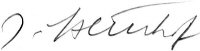 General Johannes Steinhoff Our estimated value of this signature : £80 Died : 1994 | General Johannes Steinhoff By early 1940 Macky Steinhoff was leading 4 / JG-52 during the Battle of Britain. He was then transferred to the eastern front where his success continued. In the final stages of the defence of the Reich he joined JV-44 flying the ME 262 in which he scored 6 victories before being seriously burned in a crash. He flew 939 missions scored 178 victories and was awarded the Knights Cross with Oak leaves and swords. |
  Hannes Trautloft Our estimated value of this signature : £70 Died : 1995 | Hannes Trautloft Hannes Trautloft is one of the Luftwaffe's great fighter leaders, scoring his first air victory in the Spanish Civil War in August 1936. Returning to Germany in 1937 he joined the national aerobatics team flying the Me109. Soon after the outbreak of World War II, Hannes took command of I./JG20 taking part in the Battle of Britain, before moving to the Balkans as Kommodore of JG54. Now leading the group on the Russian Front, JG54 took part in the heavy fighting, first in the Me109, then the Fw190. In the summer of 1943 Hannes Trautloft joined General Galland's staff. As a 'mutineer' he was sacked by Goering, thus ending an illustrious combat career comprising 550 combat missions and 57 aerial victories. he died 11th January 1995. |
  Hauptmann Rudolf Trenkel Our estimated value of this signature : £45 Died : 2001 | Hauptmann Rudolf Trenkel Rudolf Trenkel was born on 17 January 1918 at Neudorf in the Ballenstedt region of Sachsen. He joined the army in 1936 but transferred to the Luftwaffe in 1939. On 22 February 1942, Trenkel was posted to JG 77 based on the southern part of Eastern front. Unteroffizier Trenkel was assigned to III./JG 77. He flew with 7./JG 77 and on 26 March he claimed his first victory over I-153 biplane fighter. Trenkel was transferred to JG 52 based on the Eastern front on 1 May 1942. He was assigned to the Geschwaderstab. He claimed three victories serving with this unit. On 15 June 1942, Feldwebel Trenkel was transferred to 2./JG 52 based on the Eastern front. Trenkel recorded his 20th victory on 2 November. On 17 December, Trenkel shot down six enemy aircraft to record his 23rd through 28th victories. He recorded five victories on 16 April 1943 (46-50) and four victories on 2 June (73-76). Trenkel was transferred to Ergänzung-Jagdgruppe Ost in June 1943. Reputedly he claimed three victories with the unit. Oberfeldwebel Trenkel was awarded the Ritterkreuz on 19 August for 76 victories. In October 1943, Trenkel returned to front line duty with 2./JG 52. He claimed 18 victories during October. However, on 2 November, he was shot down in Bf 109 G-6 (W.Nr. 140 167) 'Black 3' by a Russian Yak-9 fighter and badly wounded. Following his recovery from the wounds received in November 1943, Trenkel trained as an officer and transferred to Stab/JG 52 with the rank of Oberleutnant. On 14 July, Trenkel claimed his 100th victory. On 15 August 1944, Trenkel was appointed Staffelkapitän of 2./JG 52. In October, Trenkel claimed 12 victories in 10 days but was shot down five times. On 15 October, Trenkel shot down six enemy aircraft (122-127). He was shot down again on 15 March 1945 by flak. Trenkel baled out of his stricken Bf 109 G-14 (W.Nr. 465 260) 'Black 12' wounded. Following the surrender, US troops handed over Trenkel to the Russians. However, after four weeks, he was repatriated due to the deterioration of the wounds received in his last combat. He died on 26 April 2001. Rudolf Trenkel was credited with 138 victories in over 500 missions. Of the 138 victories recorded over the Eastern front, at least 42 were Il-2 Sturmovik ground attack aircraft. |
  Walter Wolfrum Our estimated value of this signature : £60 Died : 2010 | Walter Wolfrum Walter Wolfrum first saw combat in the Crimea with 5/JG52. He was shot down three times, and wounded twice before scoring his first victory. With his score at 70 he was again wounded, but returned to take command of 1/JG52 in May 1944, taking part in the fiercely fought defence of the Ploesti oilfields. he was again wounded, but returned to command 1/JG52 until the end of the war. he had flown 423 missions, achieved 137 victories, and was awarded the Knights Cross. Sadly, Walter Wolfrum passed away on 26th August 2010. |
| Me109 Squadron details |
JG26 Country : Germany | JG26 Jagdgeschwader 26 Schlageter was a Luftwaffe fighter-wing of World War II. It operated mainly in Western Europe against Great Britain, France and the United States but also saw service against Russia. It was named after Albert Leo Schlageter, a World War I veteran and Freikorps member arrested and executed by the French for sabotage in 1923. Commanders of II. Gruppe JG 26 Hptm. Werner Palm, 1 May 1939 – 27 June 1939 Hptm Herwig Knüppel, 28 June 1939 – 19 May 1940 Hptm Karl Ebbighausen, 20 May 1940 – 31 May 1940 Hptm. Erich Noack, 1 June 1940 – 24 July 1940 Hptm Karl Ebbighausen, 25 July 1940 – 16 August 1940 Hptm Erich Bode, 17 August 1940 – 3.10.40 Hptm Walter Adolph, 4 October 1940 – 18 September 1941 Hptm Joachim Müncheberg, 19 September 1941 – 21 July 1942 Hptm Conny Meyer, 22 July 1942 – 2 January 1943 Maj Wilhelm-Ferdinand Galland, 3 January 43 – 17 August 1943 Hptm Hans Naumann, 18 August 1943 – 8 September 1943 ObLt Johannes Seifert, 9 September 1943 – 25 November 1943 Maj Wilhelm Gäth, 26 November 1943 – 1 March 1944 Hptm Hans Naumann, 2 March 1944 – 28 June 1944 Hptm Emil Lang, 29 June 1944 – 3 September 1944 Hptm Georg-Peter Eder, 4 September 1944 – 8 October 1944 Maj Anton Hackl, 9 October 1944 – 29 January 45 ObLt Waldemar Radener, 30 January 1945 – 22 February 1945 Hptm Paul Schauder, 23 February 1945 – 1 May 1945 |
JG3 Country : Germany | JG3 Jagdgeschwader 3 (JG 3) Udet was a Luftwaffe fighter-wing of World War II. The Geschwader operated on all the German fronts in the European Theatre of World War II. It was named after Ernst Udet in 1942. Commanders of IV./JG 3 Major Franz Beyer, 1. June 1943 Hauptmann Heinz Lang , 11 February 1944 Major Friedrich-Karl Müller, 26 February 1944 Hauptmann Heinz Lang , 11 April 1944 Major Wilhelm Moritz, 18 April 1944 Hauptmann Hubert-York Weydenhammer, 5 December 1944 Major Erwin Bacsila, 5 January 1945 Oberleutnant Oskar Romm, 17 February 1945 Hauptmann Gerhard Koall, 25 April 1945 Hauptmann Günther Schack, 1 Mai 1945 |
JG5 Country : Germany | JG5 Eismeer was a Luftwaffe fighter Wing that served during World War II. As the name Eismeer (Ice Sea) implies, it was created to operate in the far North of Europe, namely Norway, Scandinavia and northern parts of Finland, all nearest the Arctic Ocean. Just over two dozen fighter aircraft that once served with JG 5 during the war still survive in the 21st century, more than from any other combat wing of any of the Axis air forces of World War II. |
JG51 Country : Germany | JG51 Jagdgeschwader 51 Mölders was a Luftwaffe fighter wing during World War II, named after the fighter ace Werner Mölders in 1942. JG 51's pilots won more Ritterkreuz des Eisernen Kreuzes than any other Jagdgeschwader, and flew combat from 1939 in all major theatres of war. Flying Bf 109s and then FW 190s, the wing claimed over 8,000 air victories. Experten included 'Toni' Hafner, Heinz Bär, Richard Leppla, Karl-Gottfried Nordmann, Günther Schack and the legendary Mölders. Formed in August 1939, and commanded by 48-year-old World War I ace Onkel Theo Osterkamp, the early months of the war JG 51 was based in the West, fighting in the French campaign, and in the Battle of Britain. From late June to mid July JG 51 was the only fighter Geschwader engaged against the RAF constantly. During the whole battle JG 51 lost 68 pilots, the highest casualty rate of the Luftwaffe fighter units engaged. JG 51 was one of the two Geschewader that had four Gruppen. The other being JG 1. Four Bf 109 of JG 51 in France 1940Whilst based out of the Belgian airfield at Mardyik in late 1940, the German ace Josef "Pips" Priller was a Staffelkapitän with JG 51, flying Bf 109-E "Yellow One". Josef Priller went on to score over 100 victories, the third highest scoring Luftwaffe day fighter ace on the Western Front, fighting solely against the Western Allies. Against the Western Allies JG 51 had claimed 345 aircraft destroyed by May 1941. JG 51 were therefore one of the Jagdwaffe's elite units, with 'top ten' aces at this time including Werner Mölders with 68 claims, Walter Oesau with 34 claims, and Hermann-Friedrich Joppien with 31. Major Werner Mölders became unit Geschwaderkommodore during July 1940 and led the unit into the invasion of Russia in June 1941. Barbarossa (1941) Claiming 69 kills on the first day of the offensive, by 30 June 1941 JG 51 became the first fighter Geschwader to claim 1,000 air victories (113 kills in 157 sorties were claimed for the day). On 24 June JG 51 claimed 57 bombers shot down for the day. Mölders became the first fighter pilot to reach 100 claims in August and in the same month JG 51's Oberfeldwebel Heinz Bär reached 60 claims and was decorated with the Oak Leaves. A total of 500 Soviet claims was reached on 12 July 1941, although 6 pilots had been lost by JG 51 in the intervening 3 weeks since the offensive had started. After Mölders' departure in September 1941 (and death later that year) the Geschwader adopted his name as a title of honor in early 1942. Jagdgeschwader 51 Mölders was to remain on the centre sector of the Russian front throughout the rest of 1941. However Oberstleutnant Friedrich Beckh ( one of the few fighter pilots to wear spectacles) proved an uncharismatic commander after Mölders, and it was not until Major Karl-Gottfried Nordmann took over in April 1942 that a worthy successor to Mölders was found. In the period 22 June - 5 December 1941 the unit destroyed 1,881 Soviet aircraft, in return for 84 losses in aerial combat and a single aircraft on the ground. Air support for the Wehrmacht's Army Group Centre was entrusted to General Wolfram Freiherr von Richthofen's VIII. Fliegerkorps. In early January 1942, among the fighter units available to von Richthofen were II, III and IV/ JG 51. With the onset of the sub-zero conditions of the Russian winter, the majority of JG 51's available aircraft became grounded. The Russian winter counter offensive forced III./ JG 51 into flying numerous fighter-bomber operations in direct support of the infantry, and the gruppe filed few aerial 'kill' claims through January 1942. II./ JG 51 however, accounted for most of VIII. Fliegerkorps's aerial victories during the Soviet offensive. Particularly successful was the duo of Lt. Hans Strelow and Ofw. Wilhelm Mink, both of 5. JG 51. They claimed five MiG-3s of 16 IAP on 4 January (Mink claimed three) and 9 days later Mink claimed a Pe-2 and Strelow destroyed two R-Z biplanes for his 30th and 31st victories. On 4 February, Strelow increased his victories to 36 by shooting down four Russian aircraft. The 19 year-old Strelow claimed his 40th victory on 28 February and claimed 4 victories on both 6 March and 17 March. The next day he was awarded the Ritterkreuz des Eisernen Kreuzes and also shot down seven Soviet aircraft. He was awarded the Eichenlaub on 24 March, his claims total at 66. Normandy (1944) 7./JG 51, (with Bf 109G-6's) was attached to II./JG 1 in May 1944 from Brest-Litovsk, with pilots arriving at Störmede late in May and hurriedly converting to the FW-190. (It was later renamed 8./JG 1 on 15 August 1944 when the four-Staffeln Gruppe became standard) 7. Staffel was led by Ritterkreuzträger (Knight's Cross winner) Hptm. Karl-Heinz Weber with 136 confirmed kills. Its two other experten were Lt. Friedrich Krakowitzer (23 kills) and Ofhr. Günther Heckmann with 12 kills. 7./JG 51 joined II. Gruppe with 15 pilots on strength at the end of May, and during the first two months of the Normandy campaign the staffel was decimated, with twelve pilots killed, one POW and one severely wounded. As the war turned against Germany JG 51 was forced to operate closer and closer to Germany, finally staging out of East Prussia. |
JG52 Country : Germany | JG52 The most successful Luftwaffe fighter-wing of World War II, with a claim total of more than 10,000 victories over enemy aircraft. It was home to the top three scoring Experten of the Luftwaffe, Erich Hartmann, Gerhard Barkhorn and Günther Rall. The unit flew the various marks of the Messerschmitt Bf 109 exclusively through the war. |
JG53 Country : Germany | JG53 Pik-As was a Luftwaffe fighter-wing of World War II. It operated in Western Europe and in the Mediterranean. Jagdgeschwader 53 - or as it was better known, the "Pik As" (Ace of Spades) Geschwader - was one of the oldest German fighter units of World War II with its origins going back to 1937. JG53 flew the various models of Bf-109 throughout the second world war. |
JG54 Country : Germany | JG54 I./JG 54 was initially formed as I./JG 70 near Nuremberg in July 1939, just two short months before hostilities broke out. As was to become tradition within Grunherzgeschwader, the Gruppe took the Nurember coat-of-arms (a veritcally divided shield with a black heraldic bird on the left, and red and white diagonal stripes on the right) to represent the region the unit came from. On September 15, 1939, I./JG 70 was redesignated I./JG 54 The initial unit designation for II./JG 54 was I./JG 138. This unit was raised in 1938 after the Austrian annexation. Naturally many Austrian nationals were recruited when I./JG 138 was formed. The Aspern coat of arms (black lion's head surmounting a white cross on a red field) was taken by the Gruppe for its identity. I./JG 138 was briefly designated I./JG 76 before finally becoming II./JG 54 on April 6, 1940. The III./JG 54 has its roots in Prussia. Initially I./JG 21, the members were drawn from the Jesau region in Prussia. The modified Jesau coat-of-arms (a shield with a Jesau cross with three diving aircraft on a red background, with a white outline on the shield) was adopted as the Gruppe's own. On July 15, 1939, I./JG 21 was redesignated III./JG 54. However, the bureaucratic nature of the young Luftwaffe was such that it was over a year before records would reflect the new designation. Consequently, III./JG 54 fought in Poland and France as I./JG 21. Kommodoren of JG 54 : Major Martin Mettig; 2 Feb 40 to 25 Aug 40. Oberst Hannes Trautloft; 25 Aug 40 to 5 Jul 43. Major Hubertus von Bonin; 6 Jul 43 to 15 Dec 43. Oberstleutnant Anton Mader; 28 Jan 44 to Sep 44. Oberst Dieter Hrabak; 1 Oct 44 to 8 May 45. |
JG77 Country : Germany | JG77 'Ace of Hearts' Herz As (Ace of Hearts) was a Luftwaffe fighter wing during World War II. It served in all the German theaters of war, from Western Europe to the Eastern Front, and from the high north in Norway to the Mediterranean. JG 77 was formed in May 1939 with I. and II. Gruppe. III./JG 77 was formed on 5 July 1940 in Trondheim from the II(J)./JG 186. I./ JG 77 was reorganized on 21 November 1940 into IV./JG 51 and a new I./JG 77 was established. In January 1942 I./JG 77 was transferred to I./JG 5 and a new I./JG 77 was created. In April 1942 1. Staffel was transferred to Romania and designated the defence unit for the Ploie?ti oil fields at Mizil. (This staffel was redesignated 1./JG 4 in August 1942.) |
LG2 Country : Germany | LG2 |
|
Contact Details |
|
Sign Up To Our Newsletter!
This website is owned by Cranston Fine Arts. Torwood House, Torwoodhill Road, Rhu, Helensburgh, Scotland, G848LE Contact: Tel: (+44) (0) 1436 820269. Email: cranstonorders -at- outlook.com
|
 |





